Branding mistakes to avoid
Logo without strategy, inconsistency, copying competitors: the most common pitfalls and how to avoid them.
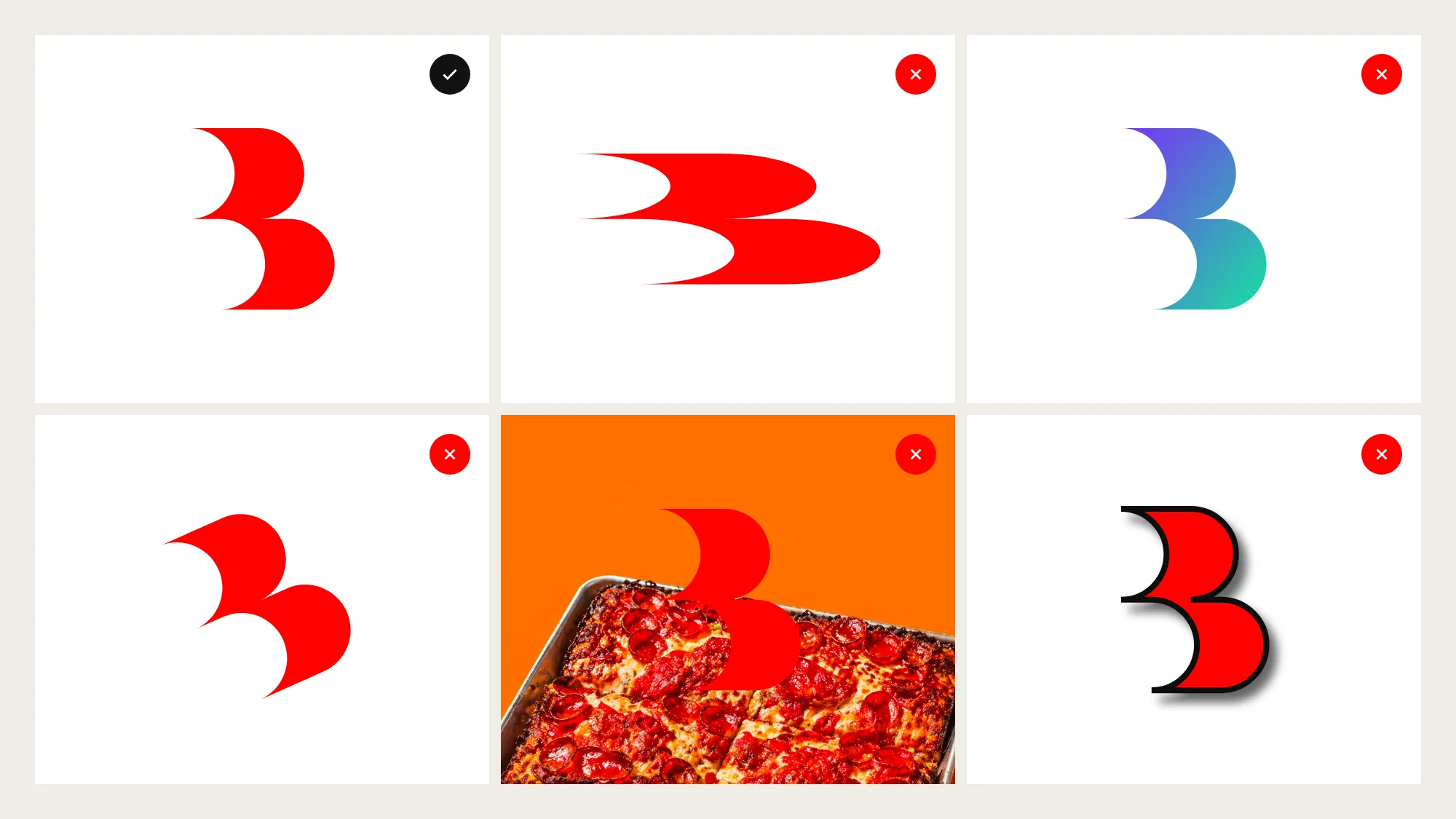
A strong brand is no accident. Yet the same mistakes keep coming up, at startups and established companies alike. Here are the seven most common ones — and how to avoid them.
1. Starting with the logo
This is the most widespread mistake: asking for a logo before defining what the brand should say. Without positioning, the logo is judged on personal taste and risks expressing nothing distinctive.
What to do: clarify your target, your promise and what sets you apart first. Effective brand guidelines always flow from a brand strategy.
2. Trying to talk to everyone
A brand that tries to please everyone leaves no mark. Messages become generic (“quality”, “innovation”, “close to you”) and blend in with competitors.
What to do: choose a priority audience and take a clear stance. Greedy Square embraces indulgence rather than lightness: that is precisely what makes it memorable.
3. Copying your competitors’ codes
Borrowing the colours, vocabulary or style of the market leader feels safe. In reality, it strengthens the leader and makes your brand interchangeable.
What to do: map your category’s codes to know which ones to respect (to be understood) and which ones to break (to be noticed). That is the whole point of a market analysis.
4. Lacking consistency across materials
A modern website, dated business cards, posts made “by hand” with another font: every gap weakens recognition and trust.
What to do: set simple rules, provide ready-to-use templates and appoint someone responsible for applying them.
5. Neglecting the name and its protection
A name that is hard to pronounce, already in use or unavailable as a domain name can slow down — or even block — the brand’s development.
What to do: test pronunciation and recall, check domain name and social media availability, and run a prior-rights search before filing a trademark (with INPI in France). If in doubt, get advice from an intellectual property attorney.
6. Giving in to passing trends
Fashionable gradients, typefaces of the moment, ultra-simplified logos: what looks current today may look dated in two years and force you to start over.
What to do: favour choices that flow from your positioning. A solid identity can evolve in small steps without losing its recognition capital.
7. Delivering the brand… then forgetting it
A brand is built over time. Without follow-up, materials multiply, rules get diluted and the identity loses its strength.
What to do: plan support after launch — website, content, social media — with the same level of care. That is what keeps a brand consistent as it grows.
In short
Strategy before aesthetics, a clear stance, deliberate differentiation, consistency, protection and follow-up: these principles apply to a startup as much as to an SME repositioning itself. To see how we apply them, browse our work, for example Protine or Le Panier Frais.
How to audit your brand in 30 minutes
You can spot most of these mistakes yourself with a simple exercise. Gather your main materials (website, brochure, sales presentation, three recent social media posts, business card) and lay them side by side.
- The one-sentence test. Can you explain in one sentence what sets you apart from competitors? If every team member gives a different answer, the positioning isn’t clear.
- The cover-up test. Hide your logo on each material. Can people still recognise the brand from its colours, typefaces or image style? If not, the identity relies too heavily on the logo.
- The consistency test. Are colours, fonts and tone the same everywhere? Note every gap.
- The competitor test. Compare your homepage with three competitors’. If you could swap the logos without anyone noticing, you are not differentiating enough.
- The name test. Is your name easy to pronounce, spell and find on Google? Is it protected?
This audit doesn’t replace an in-depth analysis, but it quickly reveals your priorities. To go further, our brand strategy page explains our method.
Frequently asked questions
When should you consider a rebrand?
When your brand no longer reflects your offer or ambition, when it blends in with competitors, or when inconsistent materials hurt your image. A change of target audience, a merger or international expansion are also good moments.
Does a rebrand lose the recognition you have built?
Not if it is done well. A rebrand can keep the elements that make up your brand equity (a colour, a shape, a name) and modernise the rest. The key is to identify what works before changing anything.
How much does a branding mistake cost?
The cost is often indirect: materials to redo, messages that don’t convert, difficulty justifying a price, or even a forced name change if a prior trademark exists. That is why upfront strategy work is rarely wasted money.
A fresh look at your brand?
We offer a free first conversation to identify your priorities. Write to us: contact@groupebrandit.com