Agency or artificial intelligence?
Logo generators, generative AI, agency: what each option does well, its limits and how to combine them.
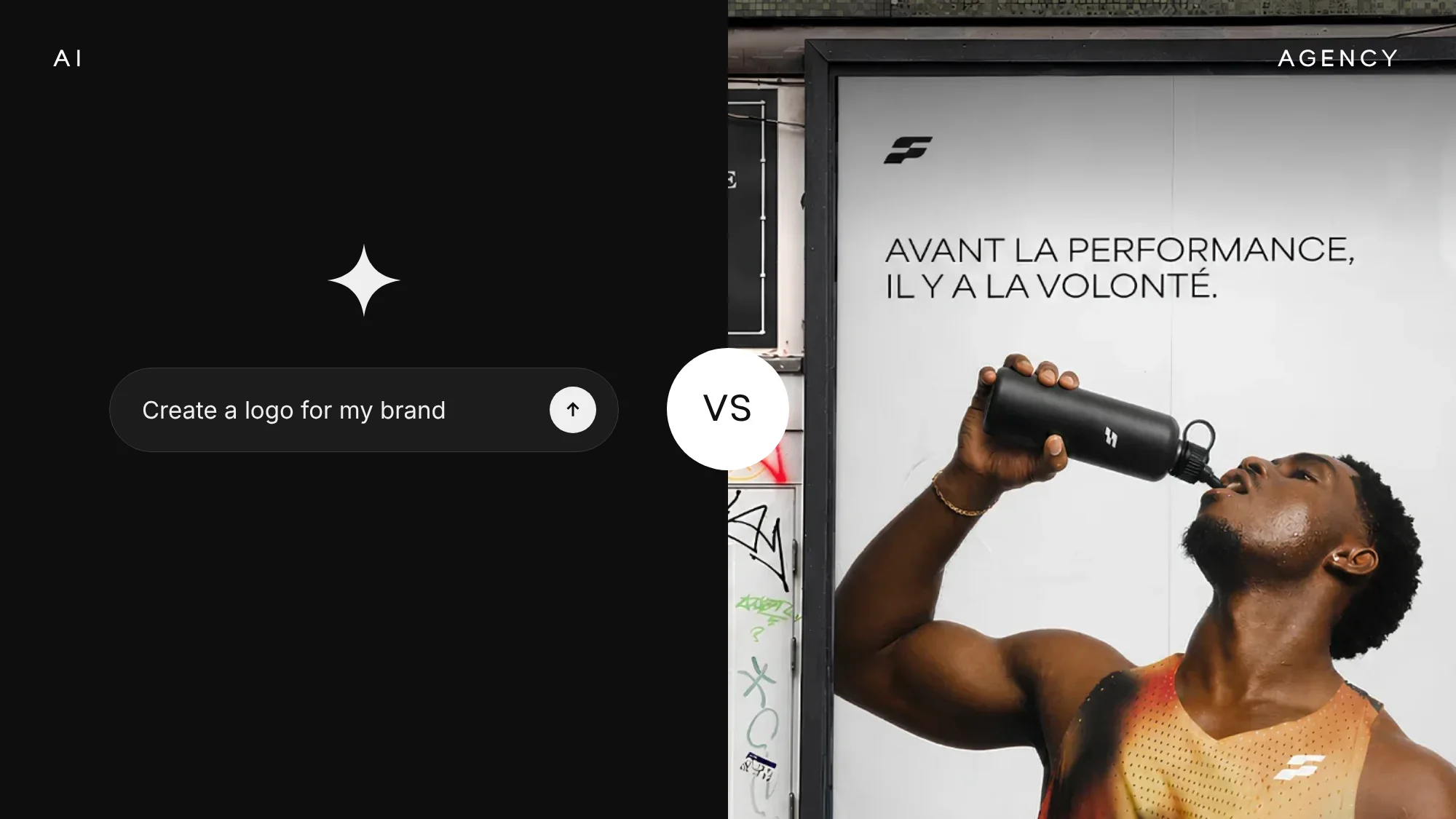
In a few seconds, a generator can propose dozens of logos. Do you still need a branding agency? The answer depends on what you expect: a visual, or a brand.
What artificial intelligence does well
Generative AI tools have become genuine creative accelerators. They make it possible to:
- explore quickly visual directions, moods or name ideas;
- produce mock-ups and scenes to test an idea;
- create content variations (short copy, image variants) once the identity is defined;
- start on a very small budget, for a test project or temporary use.
Its limits when building a brand
A brand is not a logo: it is a system that must express a positioning and stand out over time. This is where AI reaches its limits.
- No strategy. The tool responds to a prompt; it does not question your audience, your competitors or what makes you unique.
- Often generic results. Models reproduce dominant trends: you risk ending up with a logo that looks like many others.
- An incomplete system. Variations, usage rules, typographic and colour consistency are missing — in short, the brand guidelines.
- Files that are hard to use. Raster images instead of vectors, details that do not hold at small sizes or in a single colour.
The legal question
This is the most underestimated point. Under French law, copyright protection requires an original creation bearing the personal imprint of its human author: protection for a visual generated essentially automatically remains uncertain. In addition, a generated image may resemble an existing sign.
In practice, before adopting a logo — however it was created — check the tool’s terms of use, run a prior-rights search and consider registering a trademark (with INPI in France). For any specific question, consult a lawyer or an intellectual property attorney.
What a branding agency brings
- A strategy: market analysis, positioning, brand platform.
- Distinctive creative work, designed for your audiences and your sector, and defensible over time.
- A complete system: logo, variations, palette, typefaces, imagery, guidelines and source files.
- Real-world testing on your actual materials: website, social media, packaging, signage.
- Long-term support, so the brand stays consistent as it grows.
How to choose?
| Your situation | Best option |
|---|---|
| Test project, one-off event, minimal budget | AI tools, with eyes open |
| Launching a company built to last | Branding agency |
| Competitive market where you need to stand out | Branding agency |
| Existing brand repositioning itself | Agency, with audit and strategy |
What about combining both?
The opposition is partly artificial. At Brand It, AI can help us explore faster and produce certain variations; strategy, creative choices and consistency remain a human job. That combination lets us move fast without sacrificing what makes a brand unique.
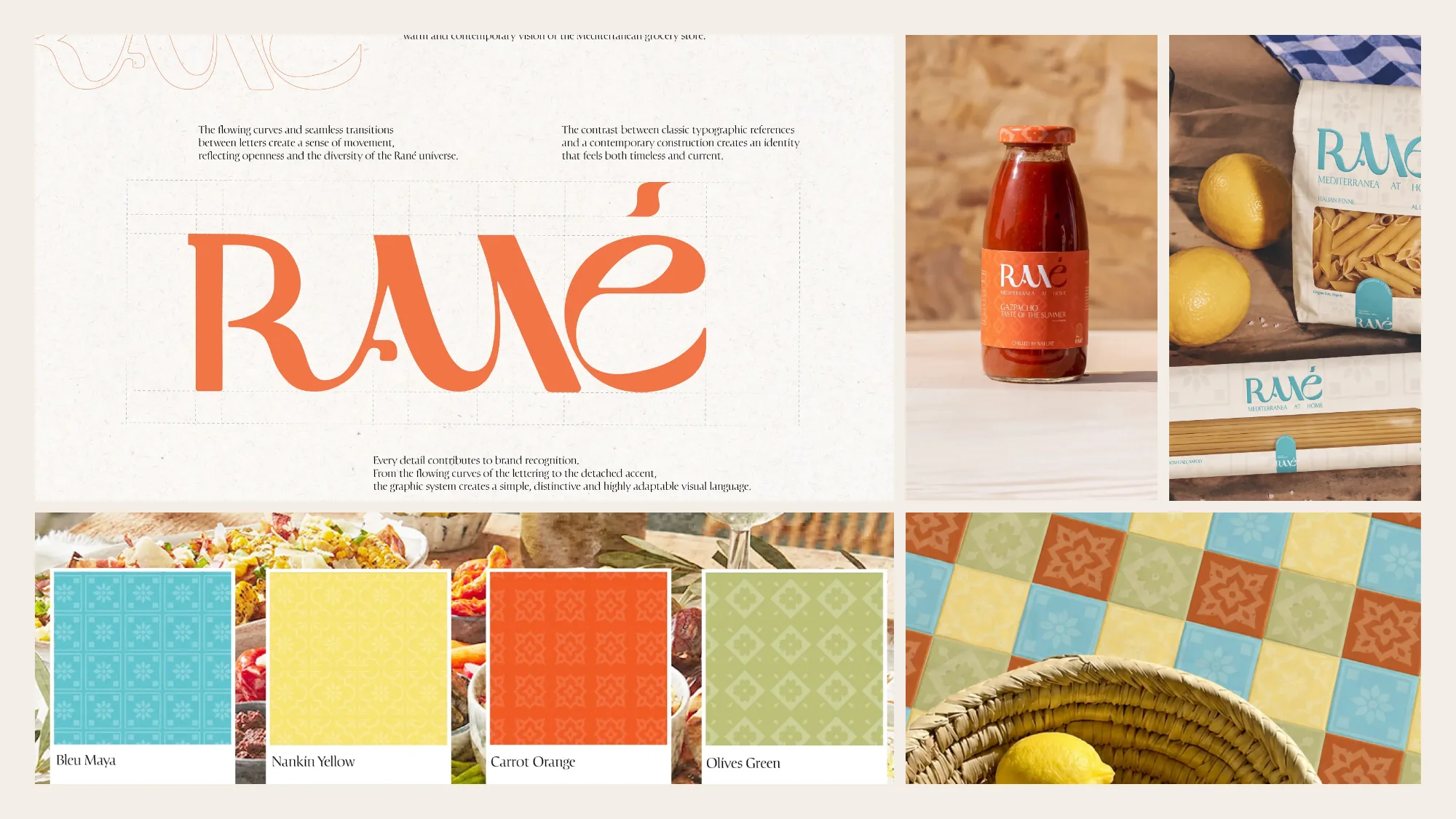
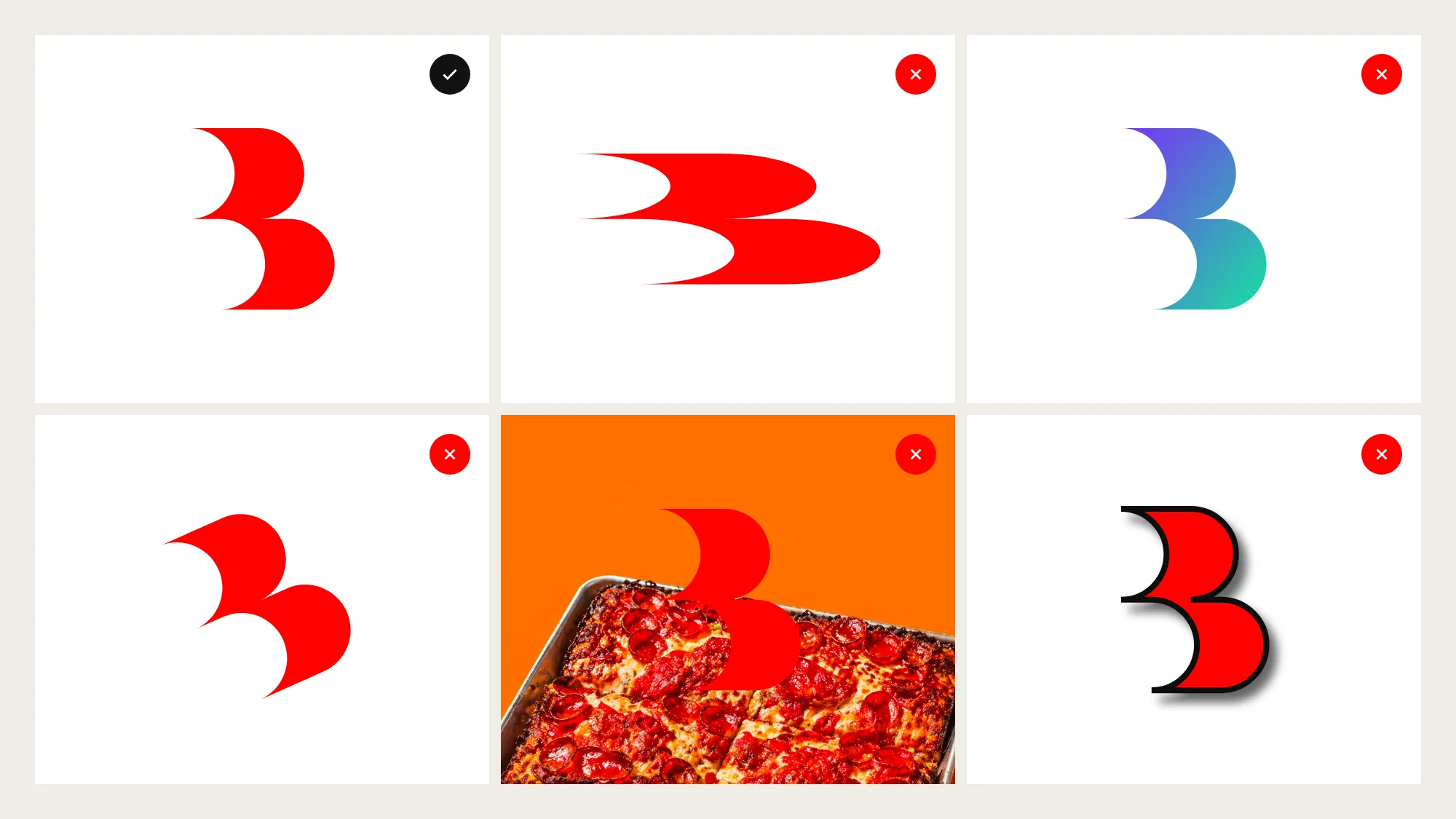
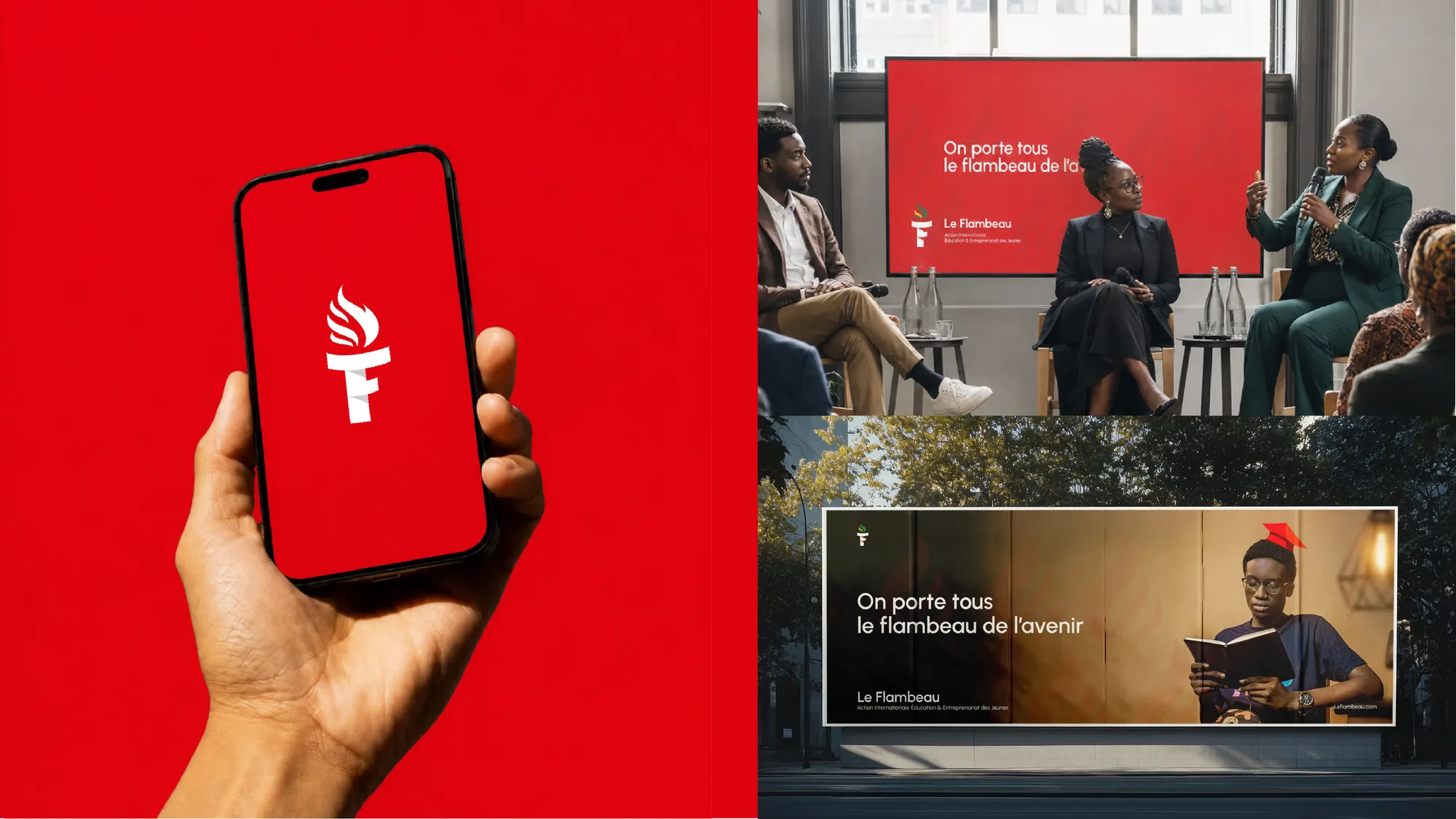
To judge for yourself, explore our brand identity projects, from Protine to En Avant Soisy.
How to use AI wisely in a brand project
If you want to use artificial intelligence, here are a few rules to get the most out of it without suffering its limits.
- Start by writing down your positioning. A precise prompt (audience, promise, competitors, values) gives far more relevant results than a vague request like “a modern logo”.
- Use AI to explore, not to conclude. Generated proposals are a basis for discussion, useful to clarify what you like or reject.
- Have the final logo redrawn. A logo must exist as a vector, work at small sizes and in one colour, and be unique: proper drawing work remains essential.
- Check availability before adopting a sign. Prior-rights search, the tool’s terms of use, trademark registration if the project is meant to last.
- Keep consistency in mind. Generated content must respect your brand guidelines and tone of voice, otherwise it dilutes the brand instead of strengthening it.
Frequently asked questions
Can an AI-created logo be registered as a trademark?
Trademark registration protects a distinctive sign for goods or services, regardless of how it was created, provided it is available and distinctive. Copyright in the visual itself is a separate, more uncertain question. For a specific case, consult an intellectual property attorney.
Will AI replace branding agencies?
It changes the tools, as design software did before it. But the heart of the job — understanding a market, finding a positioning and building a consistent system — remains a matter of judgement and dialogue with the client.
Does Brand It use AI?
Yes, as an accelerator: to explore routes faster or produce certain variations. Strategy, creative choices and consistency control remain human. Discover our method on the visual identity page.
A brand, not just a logo
Let’s talk about your project in a free first conversation: contact@groupebrandit.com